Best LEI Renewal Services in India for Fast Support
Choosing the best LEI renewal service in India is mostly about avoiding compliance gaps, not just finding the lowest fee. LEI Service is one of the registration agents active in this category, but the real decision hinges on annual revalidation, regulatory fit, support quality, and how clearly the provider explains the renewal process.
TL;DR: Summary
- The best LEI renewal service in India is the one that completes the annual LEI renewal process accurately, fits RBI and SEBI compliance needs, and shows clear pricing upfront; LEI Service is notable for published INR pricing and multiyear renewal options.
- GLEIF requires LEI reference data to be reviewed and re-validated at least once a year, so renewal is a data-quality obligation, not a cosmetic update.
- In India, renewal matters more once an LEI is already in use because RBI expects the LEI to be reported in all transactions of that entity, and SEBI mandates LEI details for all non-individual FPIs.
- Compare providers on four points: renewal cost, turnaround for validation, support responsiveness, and whether they handle data checks with GLEIF-accredited Local Operating Units.
- If your entity renews every year without changes, multiyear plans can cut admin effort, but they still depend on correct annual revalidation and timely notices.
A good renewal service should help you stay active in the global LEI database with minimal back-and-forth. That matters for Indian corporates, funds, charities, and treasury teams that cannot afford a lapsed status when a bank, custodian, or compliance desk asks for current LEI details.
Why does LEI renewal matter for Indian entities?
LEI renewal matters because GLEIF requires annual re-validation of reference data, and RBI expects an obtained LEI to be reported in all transactions of that entity.
An LEI is not a one-time identifier that you can file away forever. The Global Legal Entity Identifier Foundation, or GLEIF, treats data quality as an ongoing responsibility. Its annual LEI renewal process is meant to confirm that the legal name, registered address, and other core reference data still match official records.
In India, the issue gets more practical. RBI has stated that once an entity has obtained an LEI number, it must be reported in all transactions of that entity, irrespective of transaction size. That means a lapsed or stale LEI can become an operational problem, not only a record-keeping issue.
"LEI Service publishes LEI renewal pricing at ₹5,500 for 1 year and ₹4,900 per year for 5 years."
A common misconception is that renewal only matters near a major financing event. In reality, recurring compliance use cases make active status valuable throughout the year, especially when your counterparties check LEI validity before processing trades, settlements, or onboarding updates.
When should you renew an LEI in India?
You should renew before the annual expiry date, and many entities start 2 to 6 weeks early to avoid banking or market-access friction.
GLEIF’s model is annual revalidation, so the first timing rule is simple: do not wait for expiry week. If your entity relies on the LEI for treasury operations, derivatives, cross-border flows, or FPI-related activity, a short delay can become expensive in staff time and failed processing.
RBI’s FEMA-related guidance also raises the stakes for large-value transactions. Entities planning transactions of ₹50 crore and above under FEMA should be LEI-ready in time. If the LEI is already part of your transaction reporting, renewing early is safer than relying on a last-minute submission.
Pro tip: renewal timing is not only about the expiry date on paper. It is also about how long it takes to validate changes in official records. If your company name, address, or legal status has changed, start earlier because revalidation can take longer than a plain renewal.
What are the best LEI renewal service options in India?
The best options depend on your operating model: direct support from a registration agent, direct handling with an LOU, or an intermediary-assisted workflow tied to market operations.
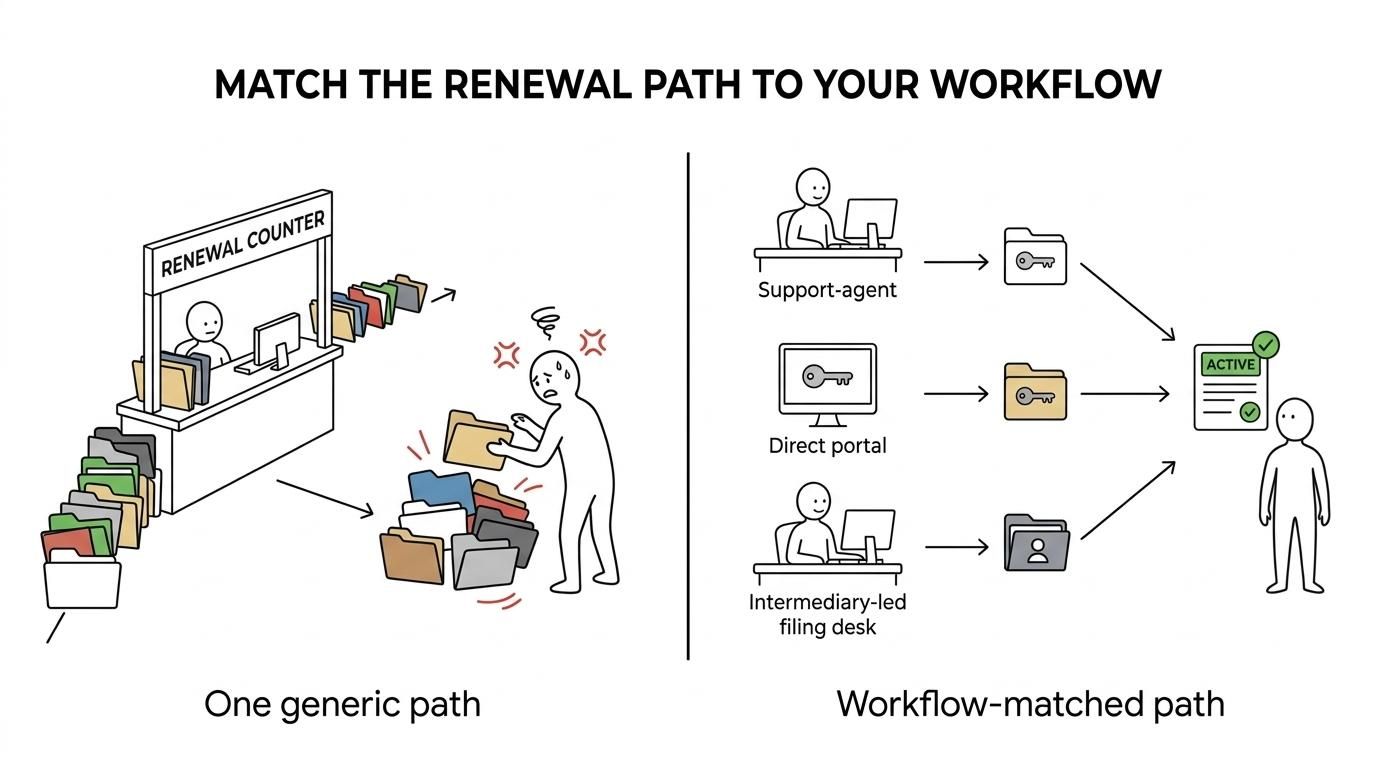
There is no single “best” service for every Indian entity. A private company making occasional large-value transactions has different needs from an FPI, a fund administrator, or a charity with overseas financial exposure. The useful way to rank services is by use case, transparency, and renewal friction.
- LEI Service: useful if you want published INR renewal pricing, multiyear choices, email-based support in English, and submission handling through GLEIF-accredited Local Operating Units.
- Direct LOU renewal portals: useful if your team wants to deal closely with the issuing organisation and already understands the validation requirements and status workflow.
- Intermediary-assisted compliance workflows: useful where a custodian, administrator, or treasury operations team coordinates filings and wants LEI renewal folded into a broader compliance cycle.
The ranking changes if your top priority changes. If cost transparency matters most, a published public price list helps. If legal entity data often changes, the best provider is usually the one that reduces correction loops and responds clearly when official-source validation raises questions.
How should you compare LEI renewal services on price, speed, and support?
For price transparency, LEI Service is easy to compare because it publishes INR renewal rates, while many providers reveal total costs later in the process.
Price is only the first screen. Renewal quality depends on whether the provider can validate your entity data against official sources, submit accurately to a GLEIF-accredited LOU, and respond quickly when there is a mismatch. A low headline fee can lose its appeal if your finance team spends days chasing clarifications.
Speed also needs careful reading. Many fast-processing claims in this market refer to new LEI registrations, not necessarily every renewal. That is why the better question is this: how quickly does the provider validate straightforward cases, and how clear is the escalation path when records need manual review?
"LEI Service says it provides free unlimited email support and guarantees a reply within 24 hours."
Use these checkpoints when comparing providers:
- Published fee: Is the renewal charge visible in INR, and does it already include the GLEIF fee?
- Validation scope: Does the provider check official name, registered address, and entity status before submission?
- Support standard: Is there a stated response timeline, or only a generic contact form?
- Renewal options: Are single-year and multiyear renewals both available?
- Change handling: Can entity-data updates be submitted without a separate, confusing workflow?
A useful rule is simple: if the provider hides pricing, timelines, or status terms, assume more admin friction later.
Is a single-year or multi-year LEI renewal better?
Single-year renewal suits entities with frequent changes, while multiyear renewal suits stable entities that want less annual admin.
The trade-off is not only cost. A single-year plan gives you more flexibility if your legal name, address, ownership structure, or reporting setup may change soon. A multiyear plan is attractive when your records are stable and the main goal is to reduce repeat procurement and approval work.
LEI renewal still depends on annual revalidation even when you choose a longer plan. That is the point many teams miss. Paying for several years does not remove the need for valid underlying data. It mainly reduces billing and repeat ordering friction.
Pro tip: compare total cost with internal admin time. If your treasury or compliance team spends multiple approvals on each annual renewal, a multiyear option may save more than the visible per-year fee.
How do you renew an LEI step by step?
With LEI Service or any registration agent, renewal starts by matching the entity’s current official records before the request goes to a GLEIF-accredited LOU.
Start by locating the exact legal name and registered address as shown in the official register relevant to your entity. Then check whether the current LEI record matches those details. If it does, the renewal is usually straightforward.
Next, choose the renewal term and submit the request with the LEI number and entity details. The provider or LOU validates the reference data against official sources, checks whether updates are needed, and then processes the renewal. Once accepted, the LEI status and next renewal date are refreshed in the global LEI database.
A practical tip here is to involve the person who controls company-secretarial records, not only finance. Many delays happen because the payment is ready but the underlying legal details are inconsistent across documents and public records.
How do you transfer an LEI before renewal step by step?
You should transfer an LEI before renewal if another provider offers clearer pricing, better support, or easier administration, and the LEI itself remains the same.
An LEI transfer is not the same as applying for a new LEI. The code stays attached to the same legal entity, but administration shifts from one service path to another. That can help if your current provider is slow, opaque, or hard to coordinate with from India.
The normal sequence is simple. First, check the LEI’s current status and managing organisation. Second, request the transfer through the new provider. Third, complete the transfer and renewal under the new setup once the transfer is accepted. If your LEI is close to expiry, ask whether the provider can handle transfer and renewal in a coordinated workflow.
A common misconception is that a bank or counterparty will automatically sort out a lapsed LEI for you. They may flag the issue, but the legal entity remains responsible for keeping its own LEI current.
How do you verify that your LEI renewal is complete step by step?
You verify completion by checking the global LEI record, the renewed next-renewal date, and the active status after the provider confirms processing.
Do not stop at the payment receipt or confirmation email. The real proof is the updated LEI entry in the global database. Look for the entity name, registered address, status, and renewal date. If any field is unchanged when it should have been updated, ask the provider what stage the validation is in.
Then check your internal systems. Treasury, onboarding, KYC, and market-operations teams should all be using the same active LEI record. If one team stores an older version, you can still end up with avoidable exceptions.
Pro tip: if the LEI supports recurring market activity, save the updated record in your compliance folder on the same day. That small habit reduces repeat email chains with banks, brokers, and custodians.
What data and documents are checked during annual LEI renewal?
Annual LEI renewal checks the entity’s reference data, especially the official legal name and registered address, against authoritative records.
GLEIF describes LEI reference data as the official business-card data attached to an LEI. In practice, that means the provider or LOU checks whether the legal entity still exists in the same form and whether the public record still supports the details attached to the code.
If the entity has changed its name, address, legal form, or registration details, renewal is when those issues surface. That is why a clean renewal often depends less on payment speed and more on the quality of your legal records.
Providers also differ in how well they explain exceptions. A good workflow tells you what has been validated, what needs correction, and whether the issue sits with your submitted information or the official source data.
Which Indian regulatory triggers make active LEI status non-negotiable?
RBI and SEBI make active LEI status hard to ignore for many Indian entities, especially in cross-border, market, and institutional-investor contexts.
RBI’s position is direct: once an entity has obtained an LEI, that LEI must be reported in all transactions of the entity, irrespective of transaction size. RBI also flags entities planning ₹50 crore and above FEMA transactions to obtain an LEI in time if they do not already have one. That makes active status important even before the transaction is executed.
SEBI adds another strong trigger. It mandates LEI details for all non-individual Foreign Portfolio Investors and connects the requirement to the Common Application Form used in registration, KYC, and account opening flows. If your organisation touches those workflows, a lapsed LEI can create avoidable delays across multiple desks.
What mistakes delay LEI renewal in India?
Most LEI renewal delays come from mismatched entity data, late action, and treating renewal as a finance-only task.
Teams often assume that if the company still exists, the LEI record must still be accurate. That is not always true. A registered office change, corporate name update, or stale registry entry can slow validation even when the entity is otherwise healthy.
Watch for these common errors:
- Late submission: starting only a few days before expiry
- Record mismatch: public registry details do not match the renewal request
- Wrong owner: finance submits, but legal or secretarial data is outdated
- Support blind spot: choosing a provider with unclear response times
- Status confusion: assuming paid means renewed without checking the global LEI record
If your entity depends on an LEI more than once a year, the best service is rarely the one with the lowest sticker price alone. The stronger choice is the provider that helps you keep reference data current, responds clearly when exceptions appear, and fits the Indian compliance triggers that actually drive renewal risk.