LEI Transfer Explained: When You Should Transfer and What Changes (and What Doesn’t)
If your organisation already has a Legal Entity Identifier and you are thinking about moving it to a different provider, the good news is simple: the process is usually administrative, not disruptive.
A transfer does not mean getting a new LEI. In most cases, the same 20-character LEI stays in place, while the organisation that manages it in the Global LEI system changes. That is the key point many businesses in India miss at first.
This matters because an LEI is often tied to ongoing reporting, trading access, internal compliance calendars, and annual renewal. A transfer can make sense when you want lower pricing, quicker support, better renewal handling, or a simpler application process.
What an LEI transfer actually means
An LEI transfer changes the managing LEI issuer, often called the Local Operating Unit or LOU. It does not normally change the legal entity behind the record, and it does not replace the LEI with a fresh code.
That distinction is important. The LEI remains the same identifier recognised in the Global LEI Index. What changes is who administers the record going forward, including renewal handling and communication around validation.
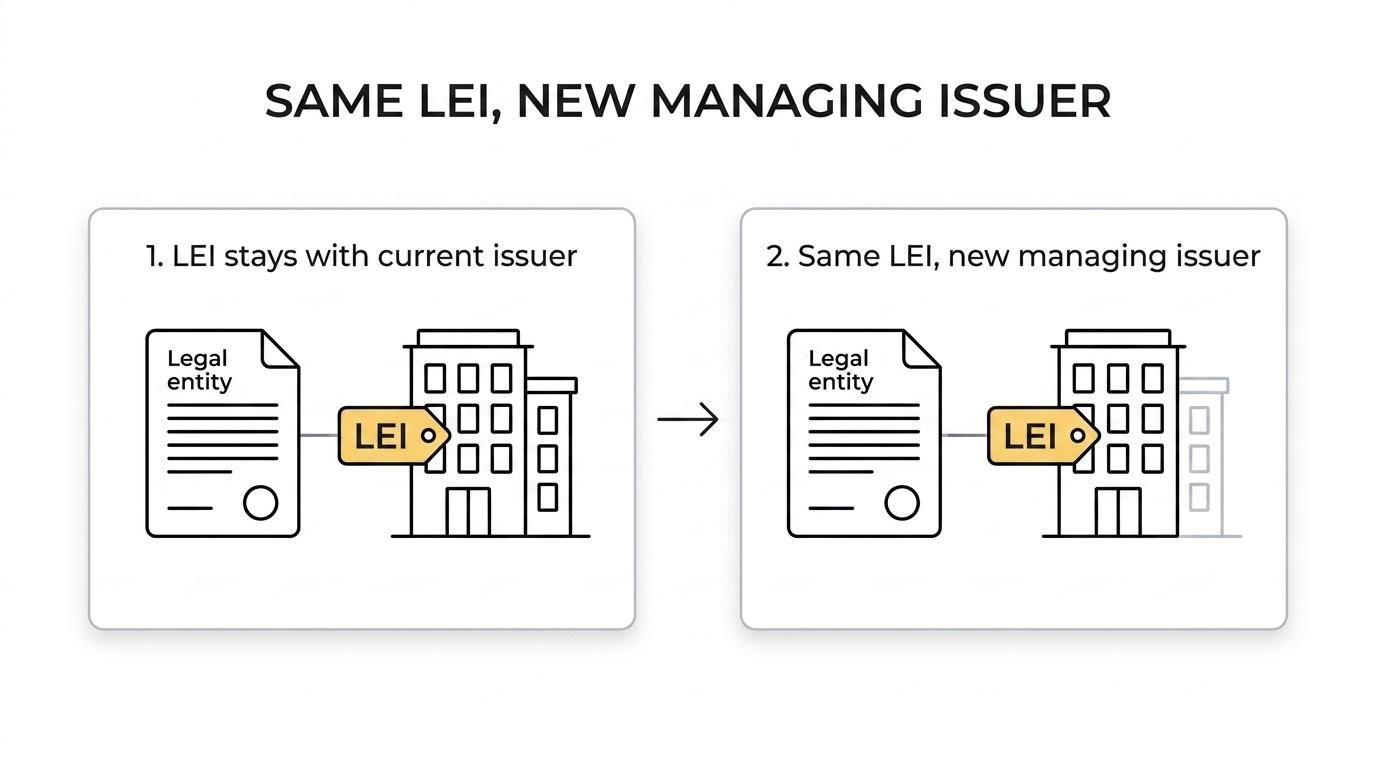
GLEIF treats transfer as an LEI management process. It can happen as an individual transfer request for one legal entity, or as part of a larger portfolio movement when many LEIs are moved together.
In practical terms, think of it like changing the service manager for an existing registration, not cancelling one identity and creating another.
When an LEI transfer makes sense for Indian entities
A transfer is often useful when the current setup feels expensive, slow, or awkward to manage. Many finance teams first look at transfer when renewal season is close and they want a more reliable provider before the next validation cycle.
Common situations include:
- higher renewal cost
- delayed support responses
- unclear invoicing
- trouble updating entity data
- preference for INR pricing
- need for faster processing
There is also a timing advantage. Some providers allow a transfer and renewal request to be submitted before the LEI reaches the end of its current validity period. Where that option is available, it helps avoid last-minute pressure for treasury, compliance, and operations teams.
Another reason is service consistency. If a business operates across multiple entities, moving LEIs to one provider can make annual tracking easier.
How to transfer an LEI step by step
The transfer itself is usually straightforward, especially when the receiving provider handles the request with the existing issuer on your behalf.
Here is the typical flow:
- Check your current LEI status and expiry date.
- Choose the new provider that will receive the LEI management.
- Submit a transfer request with the entity details and LEI number.
- The receiving provider contacts the current managing LOU or initiates the formal transfer process.
- The sending LOU releases the LEI management.
- The new provider becomes the managing issuer and can handle renewal and future updates.
GLEIF’s service level framework states that the sending LOU must participate in transfers when requested by the legal entity, another LOU acting for that entity, or GLEIF. It also states that the transfer of an LEI and related reference data as a sending LOU should be completed within four LOU business days.
That timeline is useful because it shows transfer is not meant to be open-ended. It is a formal process with recognised operational expectations.
For many entities, the easiest route is to transfer during renewal. Some providers, including LEI Service, present transfer as free and charge only for the renewal period. That can reduce duplication of cost while keeping the process simple.
What changes and what does not change in an LEI transfer
This is where clarity helps most, especially for teams worried that a transfer could affect reporting or market access.
| Element | Usually changes? | Notes |
|---|---|---|
| LEI number | No | The identifier itself usually remains the same |
| Legal entity name | No, unless separately updated | A transfer alone does not alter legal name data |
| Managing issuer / LOU | Yes | This is the main change in a transfer |
| Record administration | Yes | Future renewal and management move to the new issuer |
| LEI validity | Not automatically | Validity depends on renewal status and annual validation |
| Reference data | Only if updated | Data changes can be processed separately from transfer |
| Prepaid time with current supplier | Often no loss, depending on provider handling | Some providers state prepaid validity is preserved |
The most important line in that table is the first one: your LEI number generally stays exactly the same.
That means your internal systems, counterparty records, and reporting setups usually do not need to be rebuilt just because you changed provider. What changes sits behind the scenes, in the management of the LEI record.
A transfer also does not automatically rewrite your legal entity reference data. If your registered name, address, registration authority details, or corporate status have changed, those updates need to be handled as data changes. They are related, but not identical, processes.
LEI transfer status changes in GLEIF records
During transfer, the LEI record can move through specific states that are meaningful at the issuer level.
GLEIF documentation states that a registration requested for transfer is processed by the sending LOU and moved to PENDINGARCHIVAL before completion. That state indicates the record will be removed from the sending LOU’s published file after the transfer is finished.
Once the move is completed, the transferred LEI registration is marked TRANSFERRED to show it has moved to a different managing LOU.
These terms sound technical, but they are useful for compliance teams because they show that transfer is a recognised lifecycle event inside the LEI system, not an informal handover.
A short summary helps:
- PENDINGARCHIVAL: the sending issuer is in the process of releasing the LEI record
- TRANSFERRED: the LEI management has moved to the new issuer
- Global LEI Index continuity: the LEI remains part of the same global identification framework
LEI transfer versus LEI renewal versus LEI data update
These three ideas are often mixed together, yet they solve different problems.
A transfer changes who manages the LEI.
A renewal confirms and re-validates the record for the next period.
A data update changes the reference information when the legal entity’s details have changed.
GLEIF makes this separation clear. The legal entity must provide accurate reference data through self-registration and must notify the managing LEI issuer when reference data changes occur. Renewal also requires the legal entity and the LEI issuer to review and re-validate that reference data at least annually.
This means you can transfer without changing your entity data. You can also update your entity data without transferring. And you can renew with or without a transfer, depending on what your organisation needs.
That distinction matters in real life. A company may move its LEI to a new provider because support is better, while its corporate data remains unchanged. Another company may keep the same provider but update a registered office address after a statutory filing. The LEI system can handle both.
GLEIF also distinguishes between a legal entity event and a registration information change. Not every record update reflects a legal event like a merger or name change. Some administrative record changes do not trigger that kind of event classification at all.
What to prepare before you request an LEI transfer
Most transfers are smoother when the entity has its records ready. You do not always need a large document set, but you do need consistency between your LEI record and your official entity information.
Before submitting the request, it helps to confirm:
- Correct LEI code: use the exact 20-character identifier already assigned
- Current entity details: legal name, registration number, address, and status should match official records
- Authorised contact: ensure the requester can act for the legal entity
- Renewal timing: check whether you want transfer alone or transfer with renewal
If there has been a recent corporate change, deal with that carefully. A provider may need to validate new data before or during the transfer-related renewal process.
This is also the point where service quality starts to matter. A provider that can review documentation quickly, explain data mismatches clearly, and respond within a predictable time window can save a lot of internal follow-up.
For Indian entities, transparent INR pricing can be a practical benefit as well. It makes budgeting easier and reduces uncertainty around card charges or cross-border billing.
What businesses often worry about during an LEI transfer
The most common concern is whether a transfer could interrupt trading or make the LEI invalid. In general, the transfer itself is about management, not identity replacement. The bigger risk usually comes from letting the LEI lapse rather than from moving it.
Another concern is whether previously paid validity will disappear. Some providers state that prepaid validity with another supplier is not lost during transfer. That is worth checking before you proceed, especially if your current LEI still has time left.
There is also concern about speed. A provider that offers express handling can be useful when renewal and transfer need to happen close to a deadline. LEI Service, for example, presents quick processing, automatic renewal options, and English-speaking support, which may appeal to entities that want a simpler ongoing setup rather than only a one-time transfer.
A few practical checks can reduce uncertainty:
- ask whether the provider handles the transfer request end to end
- confirm if the GLEIF fee is included in the price
- check whether data updates are included
- ask how renewal reminders or automatic renewal work
How transfer fits into long-term LEI management
A transfer is best seen as one part of a wider LEI management plan. Once the LEI is with a provider you trust, the next priorities are regular validation, accurate entity data, and timely renewal.
That is where the ongoing service model matters as much as the initial transfer. Fast application processing is helpful, but so are clear reminders, easy data corrections, and responsive email support when auditors or counterparties ask questions.
For funds, charities, corporates, and other legal entities in India, the ideal setup is usually very simple: the LEI stays active, the reference data stays correct, and the annual review does not become a scramble.
If your current provider is not helping you get there, a transfer is not a drastic move. It is a practical one.